 ®
RARE GRAPE VARIETAL RESOURCE
Horozkarasi (Horos Karasi) RARE GRAPE red
C/O Jose Vouillamoz
DNA profiling links an old grape from Kilis (South Eastern Türkiye) to the West Bank (Palestine), with a possible historical connection to Syria
In 2025, my friend Göknur Gündoğan, Turkish wine expert and author, contacted me about an interesting question raised by Ni&Ce Vineyards, a winery in the province of Kilis in south-eastern Türkiye, very close to the Syrian border.
Horos Karası, indigenous to Kilis?
Ni&Ce has recently rescued the old variety Horos Karası, a black-berried wine and table grape which most likely originates from Kilis. There was one question that Ni&Ce Vineyards particularly wanted to solve: is Horos Karası really a distinct grape variety, or could it be the same as Antep Karası, “the black from Antep”, from the neighbouring (and competing…) province of Gaziantep? In 2025, Bestami Gün sent me samples of the two varieties for DNA profiling. The results were very exciting. In mid-September 2026, Ni&Ce Vineyards invited me to Kilis to see the vineyards of Horos Karası for myself.
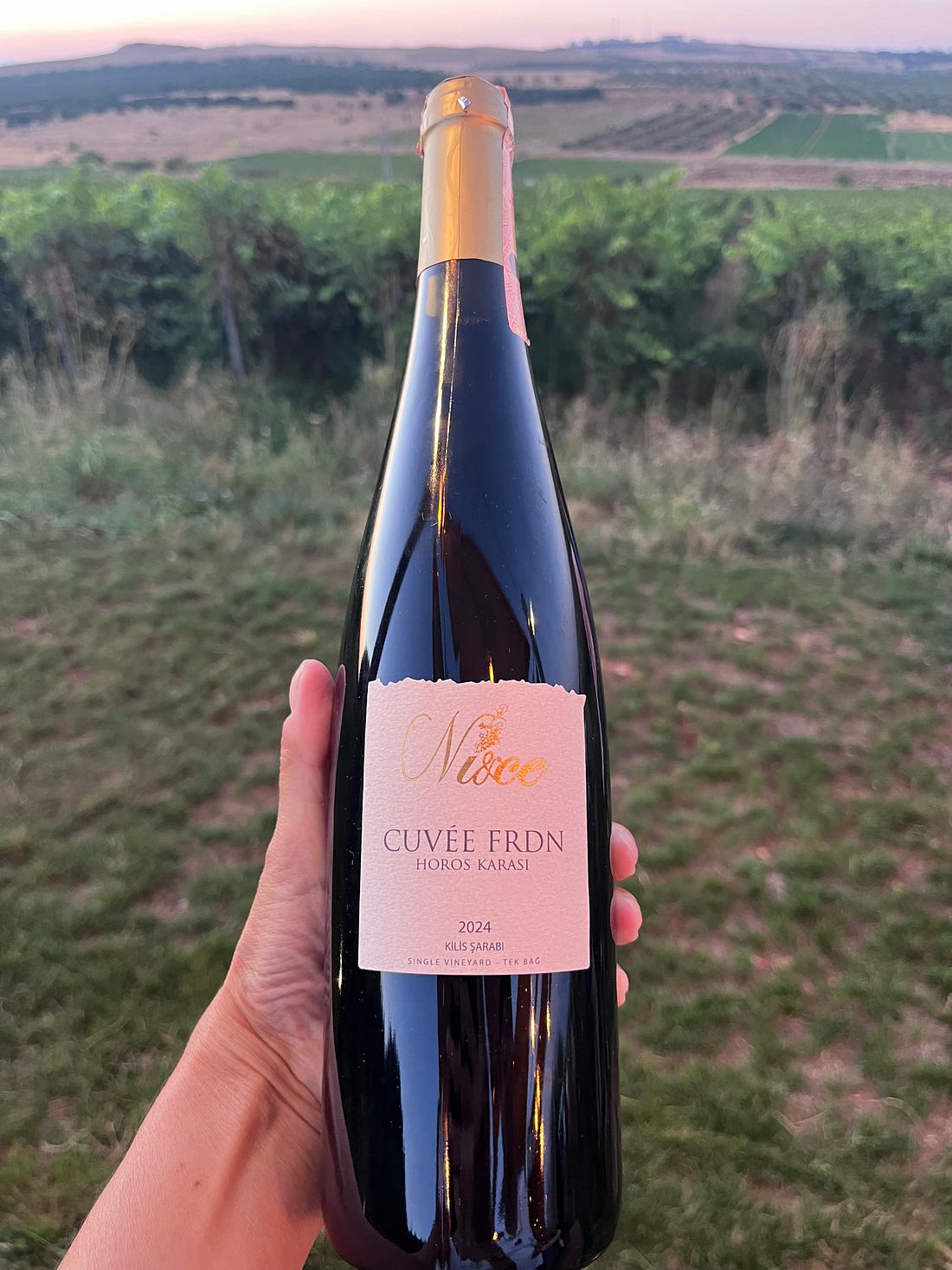
Cuvée FRDN 2024 is the first 100% Horos Karası ever produced. Ni&Ce Vineyards made 532 bottles only!
References
Basheer-Salimia, R., Lorenzi, S., Batarseh, F., Moreno-Sanz, P., Emanuelli, F. & Grando, M. S. (2014). Molecular identification and genetic relationships of Palestinian grapevine cultivars. Molecular Biotechnology 56, 546–556. DOI: 10.1007/s12033-013-9728-7.
Drori, E., Rahimi, O., Henig, Y., Lorenzi, S., Brauner, H., Marrano, A., Amar, Z., Netzer, Y., Failla, O. & Grando, M. S. (2015). Ampelographic and genetic characterization of an initial Israeli grapevine germplasm collection. Vitis 54 (Special Issue), 107–110.
You're currently a free subscriber to José Vouillamoz. For the full experience, upgrade your subscription.
|
|
|||||||||||
|
|||||||||||
|
|
 Like
 Comment
 Restack
© 2026 José Vouillamoz
Rue de Lausanne 52, 1950 Sion, Switzerland
Unsubscribe

Horos Karası: a rare Turkish grape that crossed bordersDNA profiling links an old grape from Kilis (South Eastern Türkiye) to the West Bank (Palestine), with a possible historical connection to Syria
In 2025, my friend Göknur Gündoğan, Turkish wine expert and author, contacted me about an interesting question raised by Ni&Ce Vineyards, a winery in the province of Kilis in south-eastern Türkiye, very close to the Syrian border. Horos Karası, indigenous to Kilis?Ni&Ce has recently rescued the old variety Horos Karası, a black-berried wine and table grape which most likely originates from Kilis. There was one question that Ni&Ce Vineyards particularly wanted to solve: is Horos Karası really a distinct grape variety, or could it be the same as Antep Karası, “the black from Antep”, from the neighbouring (and competing…) province of Gaziantep? In 2025, Bestami Gün sent me samples of the two varieties for DNA profiling. The results were very exciting. In mid-September 2026, Ni&Ce Vineyards invited me to Kilis to see the vineyards of Horos Karası for myself.
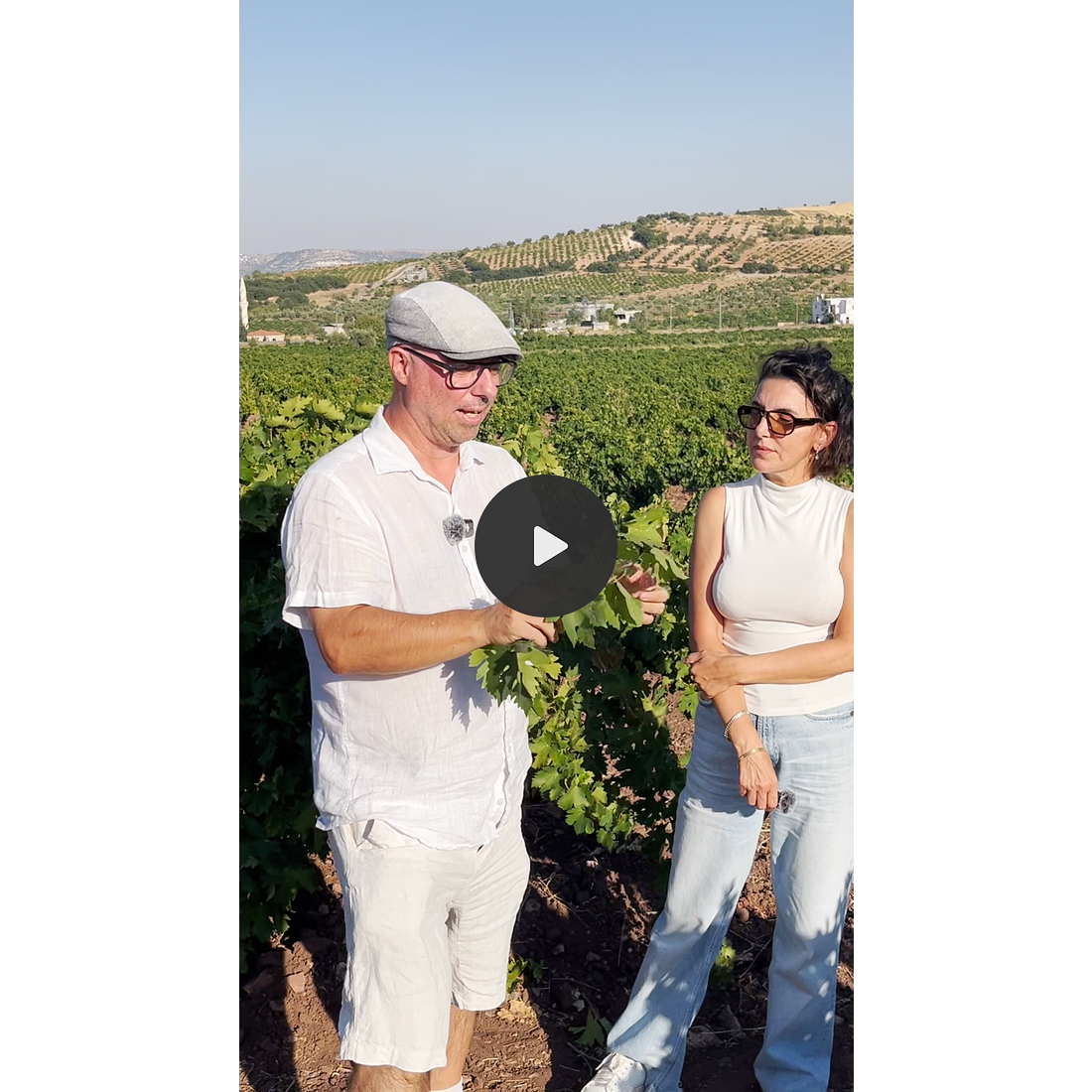
Ni&Ce Vineyards: Bestami Gün, viticulturist engineer, and Sabriye Tanem Yersel, marketing director, tell us about the rescue of Horos Karası.
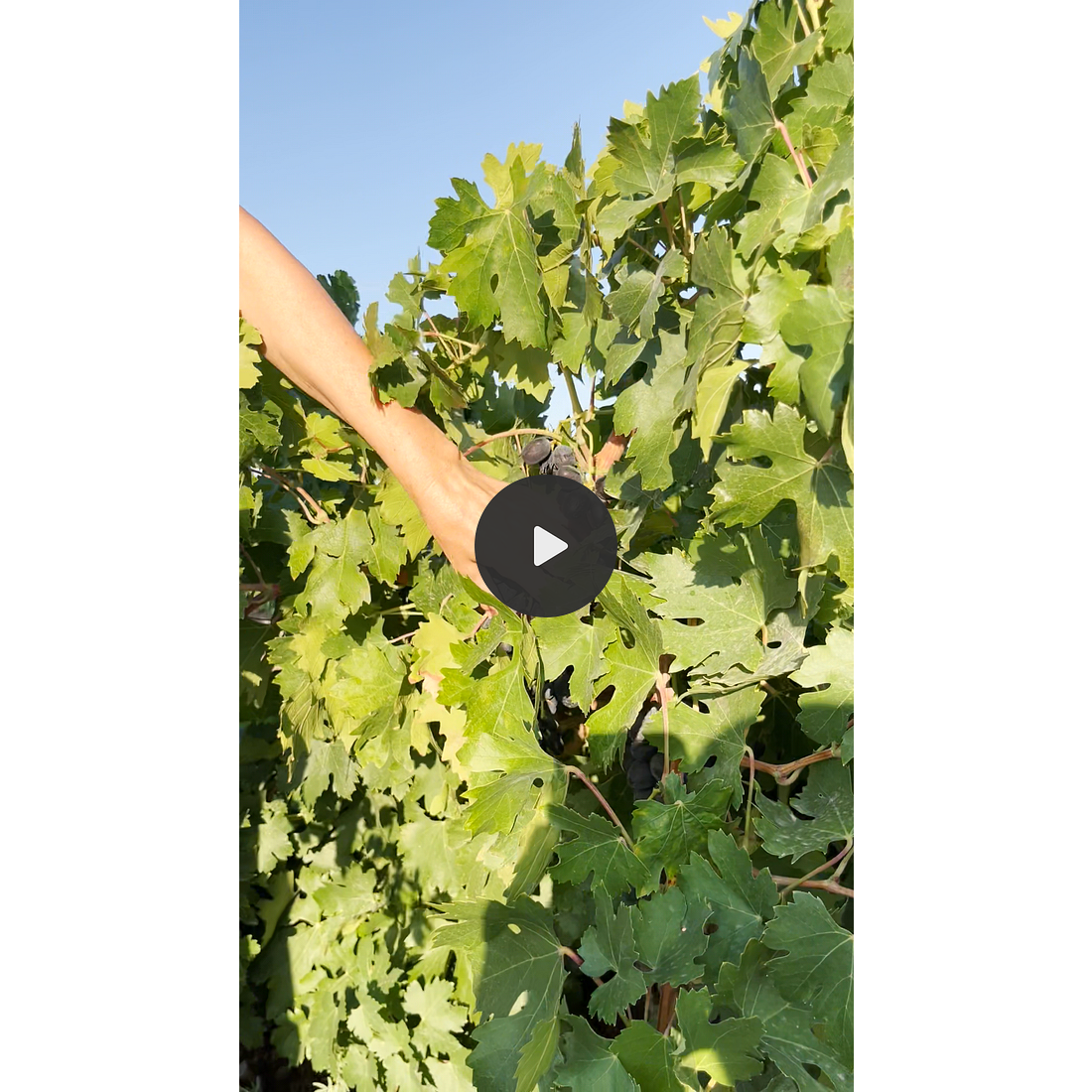
Ni&Ce Vineyards: Sabriye Tanem Yersel, marketing director, shows us the clusters of Horos Karası. DNA profiling speaksFirst of all, the DNA profile of Horos Karası did not match the one of Antep Karası, whose official name Sergi Karası, originating from the province of Gaziantep. Phew! Horos Karası and Antep Karası aren’t the same after all! But something was more exciting for me. The DNA profile of Horos Karası turned out to be identical to the variety Darawishi in Basheer-Salimia et al. (2014), collected in Al-Aroub-Hebron in the West Bank (Palestine). It was also identical to Marawani in Drori et al. (2015), an accession maintained in a collection vineyard in Ariel (Israël). Each in their own way, Basheer-Salimia et al. had found that Darawishi and another accession called Sheukhi shared the same DNA profile, and Drori et al. had shown that their Marawani had the same profile as Darawishi. But none identified it to Horos Karası. This new, and still unpublished, finding shows that a grape thought to be confined to the Kilis region actually has a much wider geographical distribution. How and when the same grape travelled between these regions remains another question. Links with Syria?There may be another clue hidden in the name itself. It is often wrongly spelled Horoz Karası, literally meaning “black rooster” in Turkish, which does not make any sense. Indeed, Horos Karası probably has nothing to do with poultry, but the name may instead refer to the historic city of Khoros, or Cyrrhus, just across the border in present-day Syria. It is an intriguing hypothesis, especially considering what the DNA is now telling us about the wider distribution of this grape. But I will leave this part of the story to Göknur Gündoğan.
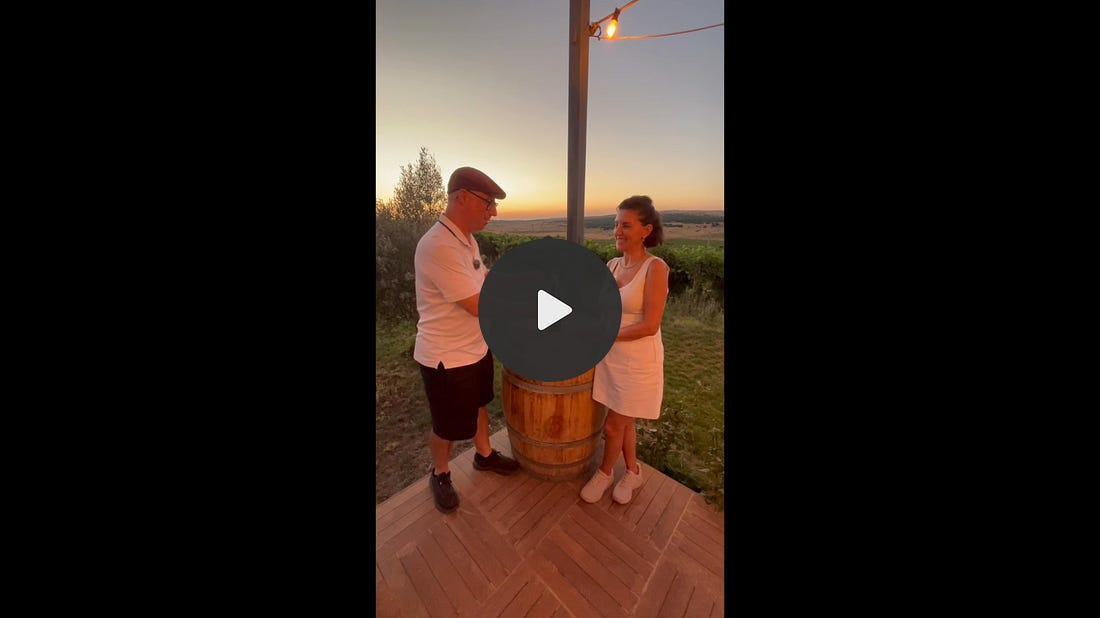
Göknur Gündoğan explaining the possible connection between Horos Karası and Khoros/Cyrrhus in neighbouring Syria. What does it taste like?Sabriye Tanem Yersel was kind enough to open for me her last bottle of Cuvée FRDN 2024, the first 100% Horos Karası ever produced. Here I am tasting it on September 12th among the vineyards of Ni&Ce.
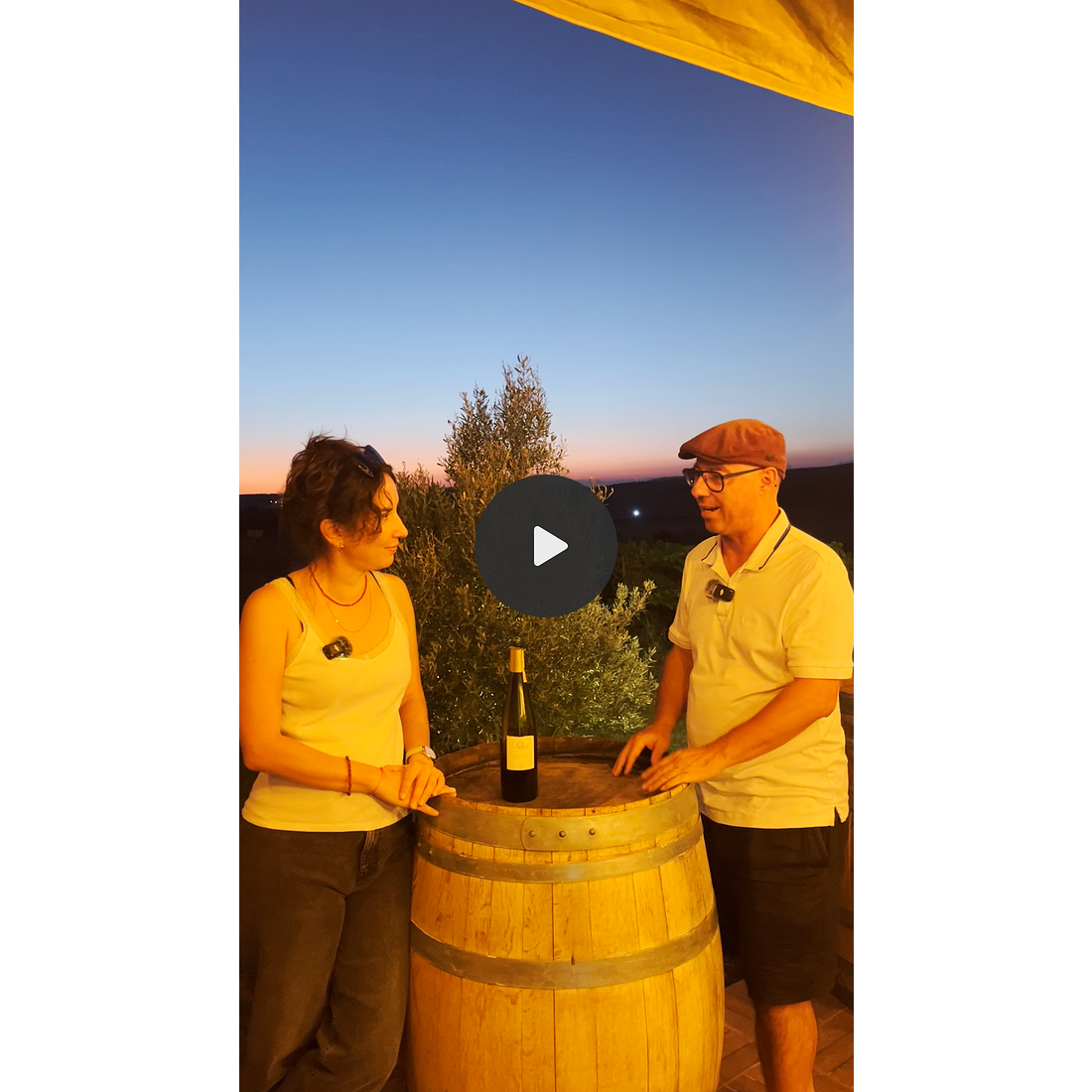
Tasting ‘live’ for the first time in my life a variety wine of Horos Karası with Sabriye Tanem Yersel, marketing director of Ni&Ce Vineyards.
|



 Countries grown:
Turkey